The stench of corruption emanating from U.S. prediction markets has become undeniable.
From the controversial decision of the highest authority in the land embracing the nascent betting phenomenon and embedding it in his own Truth Social Predicts media platform–surely a fiscal conflict of interest unprecedented in U.S. presidential history–, to iGaming heavy hitters DraftKings and FanDuel also entering the space, presumably as a vehicle to swerve accepted betting regulations and norms, something is clearly not right in “The State of Prediction Markets”.
Add the recent US$400,000 (£297,650) pay-out by Polymarket to a mystery punter who rightly, but all too suspiciously, predicted the defenestration of Venezuelan strongman Nicolás Maduro before the end of this month, January, and charges of “insider trading” are equally applicable.
The U.S. president’s own son, Donald J. Trump Jr., as previously well documented in these pages, has his own deep ties to prediction markets; sitting on the board of Kalshi as a paid Special Adviser and investing in another, Polymarket.
What does this tell us about prediction markets–technically verticals of the Futures Markets and not gambling sites–since they burst into the general view by correctly predicting Donald Trump’s victorious trot to his second presidency?
Power Brokers
Quite simply: They have the support and backing of Washington’s current power brokers and the crypto elite.
None of these prediction sites–Polymarket, Kalshi, Robinhood, among them–have made much, if any, profit to date. But they have raised billions of dollars in investment from the money markets, who see them as the coming thing, the new world of gambling, unfettered by old school regulations and taxes.
And seemingly everybody, sensing the zeitgeist, have jumped on the bandwagon; be they FanDuel–with FanDuel Predict–or DraftKings, with DraftKings Predictions.
So great is the commitment to prediction markets that both FanDuel and DraftKings dumped their membership of the online gambling industry’s representative American Gaming Association because of their opposition to the futures platform model and its current sketchy grey-market legality.
Meanwhile other media behemoths, such as CNN and ESPN, have also tapped prediction markets in deals, respectively, with Massachusetts-origin Kalshi and DraftKings.
Pivotal Moment
Michael S. Selig new Chair of the regulatory U.S. Commodity Futures Trading Commission (CFTC), which putatively oversees prediction markets, has told the Washington Post:
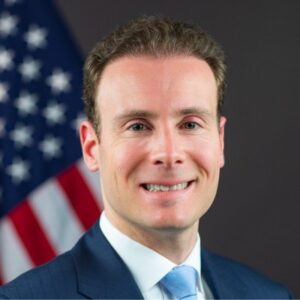
“We are at a pivotal moment in the evolution of American financial markets.
“Advances in technology are enabling the creation of entirely new products, platforms and business models, in turn transforming the financial services landscape as we know it.
“And thanks to President Donald Trump’s leadership, Congress is now on the cusp of enacting historic digital asset market structure legislation, which would provide long-overdue regulatory clarity to an American industry that embodies the promise of the future.”
Prediction markets sit firmly in the van of this new frontier of finance.
Legal Challenges
But first they have to make their way through a blizzard of lawsuits brought by outraged gambling control boards, from Massachusetts, Nevada, New Jersey and New York, among them.
Earlier this week Suffolk County Superior Court Judge Christopher Barry-Smith in Boston sided with the Massachusetts Attorney General Andrea Joy Campbell and ruled that Kalshi cannot let state residents bet on sports through its online platform without the requisite licence.
Kalshi–founded by in 2018 by CEO Tarek Mansour and CCO Luana Lopes Lara, both graduates of Boston’s elite Massachusetts Institute of Technology (MIT)–generates some 90 percent of its trading volume around sporting outcomes and claims that as such it is not a “betting site” subject to gaming laws but rather regulated by the federal U.S. Commodity Futures Trading Commission (CFTC).
But the court rejected Kalshi’s claim.
And the legal announcement was seized upon by the New York State Gaming Commission, which has its own ongoing case against Kalshi.
Fraud, Scams, Market Manipulation
In further judicial wrangling over the exact legal constitution of prediction markets, New York-city based Polymarket, Kalshi’s main rival, which was only certified to start domestic trading in the U.S. by authorities in December, at the end of last year, has now been banned in Hungary and Portugal – as well as, previously, in Belgium, Romania and Ukraine.
But despite these legal challenges Polymarket–founded in 2020 by Shayne Coplan, who became the world’s youngest self-made billionaire in 2025–continues to go from strength-to-strength, most recently signing a deal with streaming giant DAZN.
According to reports: “The agreement will see Polymarket’s live prediction data integrated across DAZN’s platform, allowing viewers to track real-time market probabilities alongside sports content.”
Like it or not, predictions markets, combining all the elements of the Trumpian zeitgeist: Power, connections, crypto and controversy are here to stay.
We watch their rise with awe and a little foreboding.
And can only hope, in the words of the CFTC’s new chair, “that the public is protected from fraud, scams and market manipulation”.
The views expressed in this column are personal — and do NOT reflect the general editorial opinion of iGamingFuture.com